Guest blog: Exploring a forgotten railway
We’re always keen to showcase organisations that help bring Britain’s railway heritage to life, from exploring forgotten railways to discovering great days out by rail. In this guest blog, Rachel Roffe from Railway Ramblers shares the story of a recent walk between St Ives, Cambridgeshire and Huntingdon.
Railway Ramblers is a friendly walking group that explores disused railways, former railway routes and the fascinating history that can still be discovered along them. Their walks, across Britain, offer a unique way to combine a love of railways, local history and the outdoors, while meeting like-minded people along the way.
By Rachel Roffe, Railway Ramblers
St Ives, Cambridgeshire to Huntingdon – 8 miles
We arrived by train in Cambridge before boarding the bus to St Ives. On the journey we passed the sites of three former stations: Histon, Oakington and Longstanton, as well as the site of Swavesey station. The station buildings still survive in various forms, with one under redevelopment, one vacant and another now operating as a pub.
About an hour later we arrived at St Ives Park & Ride, which occupies the site of the former station.
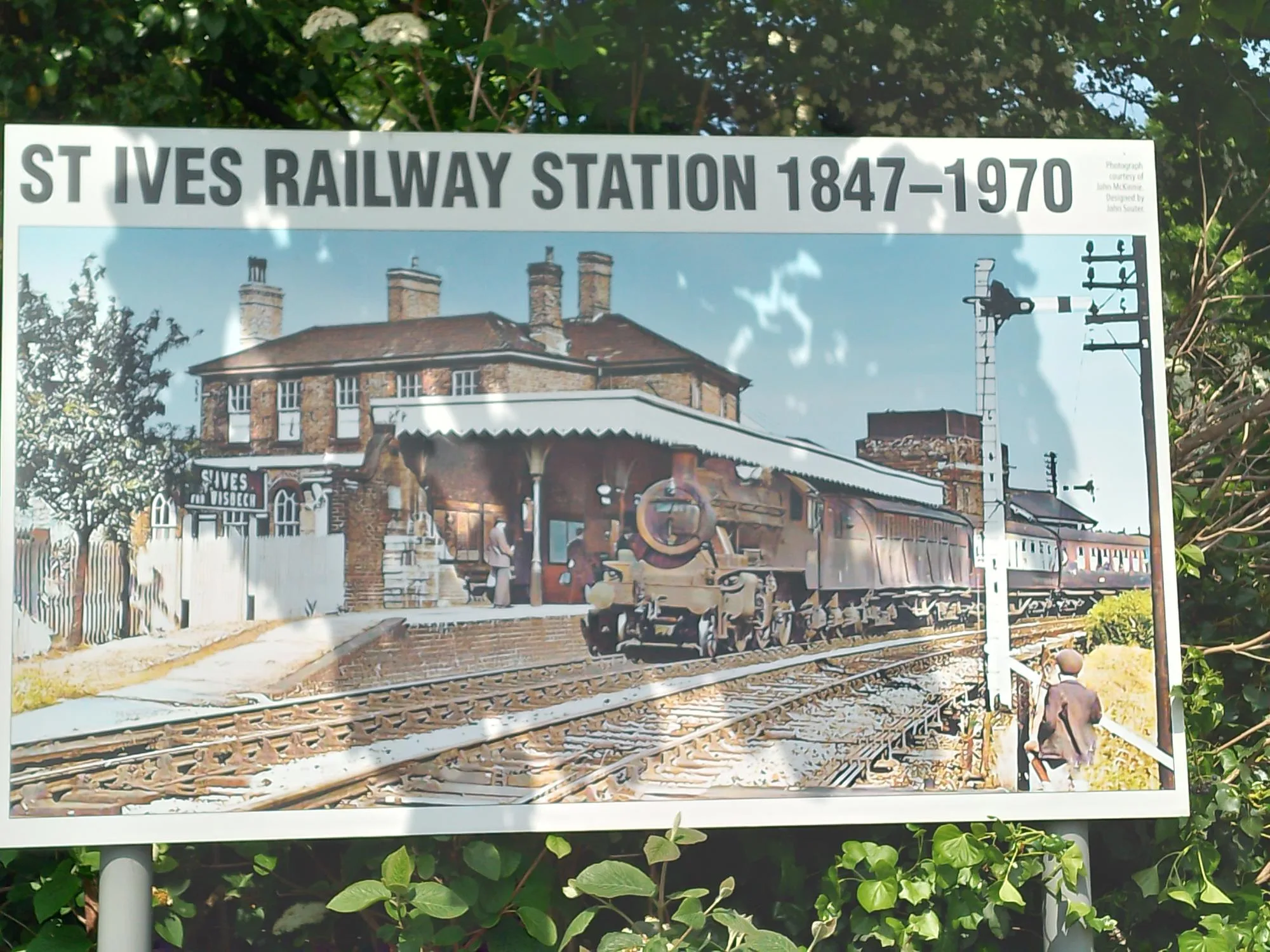
A heritage sign near the site of the old station.
We walked through the town, following what would once have been the trackbed until we reached the bridge over the River Great Ouse. Standing on the bridge, we could still spot the bridge abutments from the former railway crossing.
The railway once passed what had been the mill, now converted into apartments, where Clive Sinclair developed the famous ZX Spectrum computer. The line then crossed the river. You can still identify the route by the different coloured brickwork on the bridge. It’s fascinating to imagine what the traffic situation would be like if trains still crossed here today.
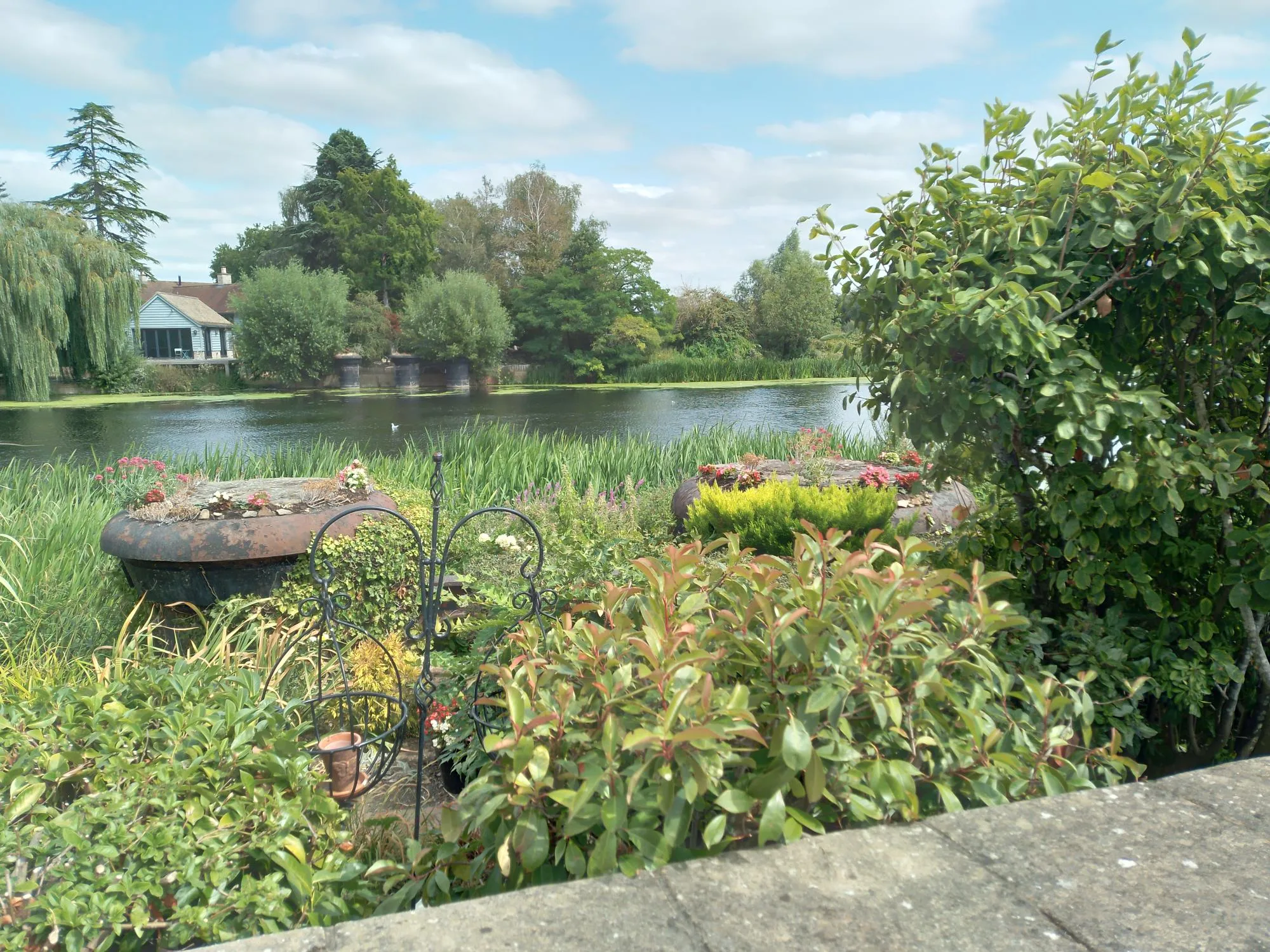
On the far side, the trackbed is still clearly visible, but unfortunately it lies on private land, forcing us to make a detour. At this point our walk became rather more adventurous than planned. We attempted to catch a bus to Houghton Mill. Wrong bus. We returned to the starting point and caught another. Wrong bus again!
Just as we were beginning to despair, a kind driver stopped and offered us a lift. The patron saint of travellers, St Christopher, was clearly looking down on us that day. Our spirits immediately lifted and we were dropped close to Houghton Mill, allowing us to continue our walk.
Before reaching the mill, we picked up the old trackbed once more and discovered the remains of a former trestle bridge.
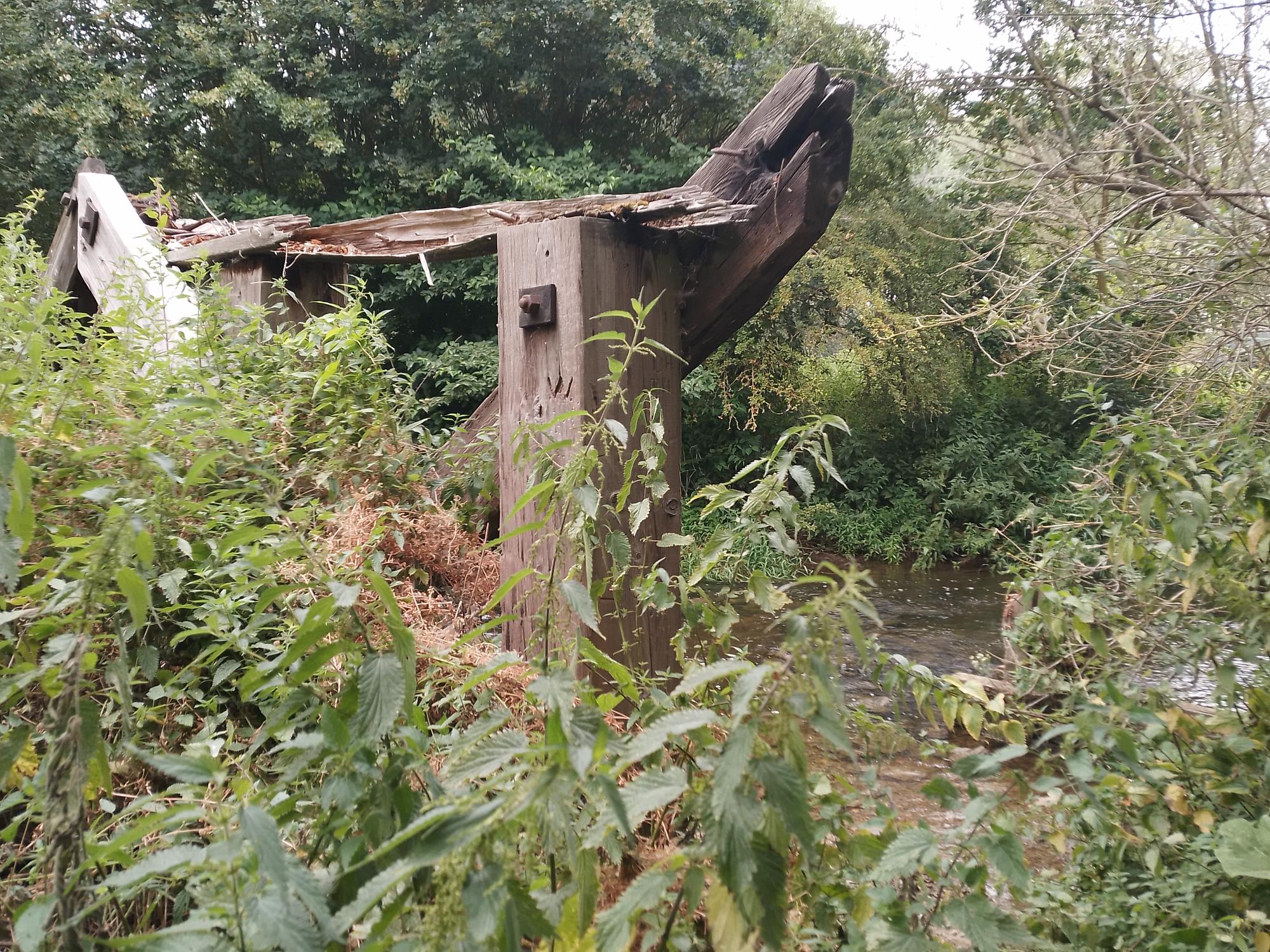
Relics of an old trestle bridge.
After lunch at Houghton Mill, we set off again towards Huntingdon. The mill, now a National Trust property, is steeped in history and makes an excellent place for refreshments and facilities, something that’s always important when planning a group walk.
In places, the old railway runs close to the footpath and sections can still be walked. Our route took us through a nature reserve and across a field occupied by a herd of cows. Slightly worrying at first, but fortunately they seemed very relaxed.
We crossed the river again and eventually reached the site of Godmanchester station. The station itself has long disappeared, but we found the former crossing house, which survives as a Grade II listed building and is currently undergoing restoration behind protective fencing.
To add to our excitement, we also spotted an original crossing gate post nearby.
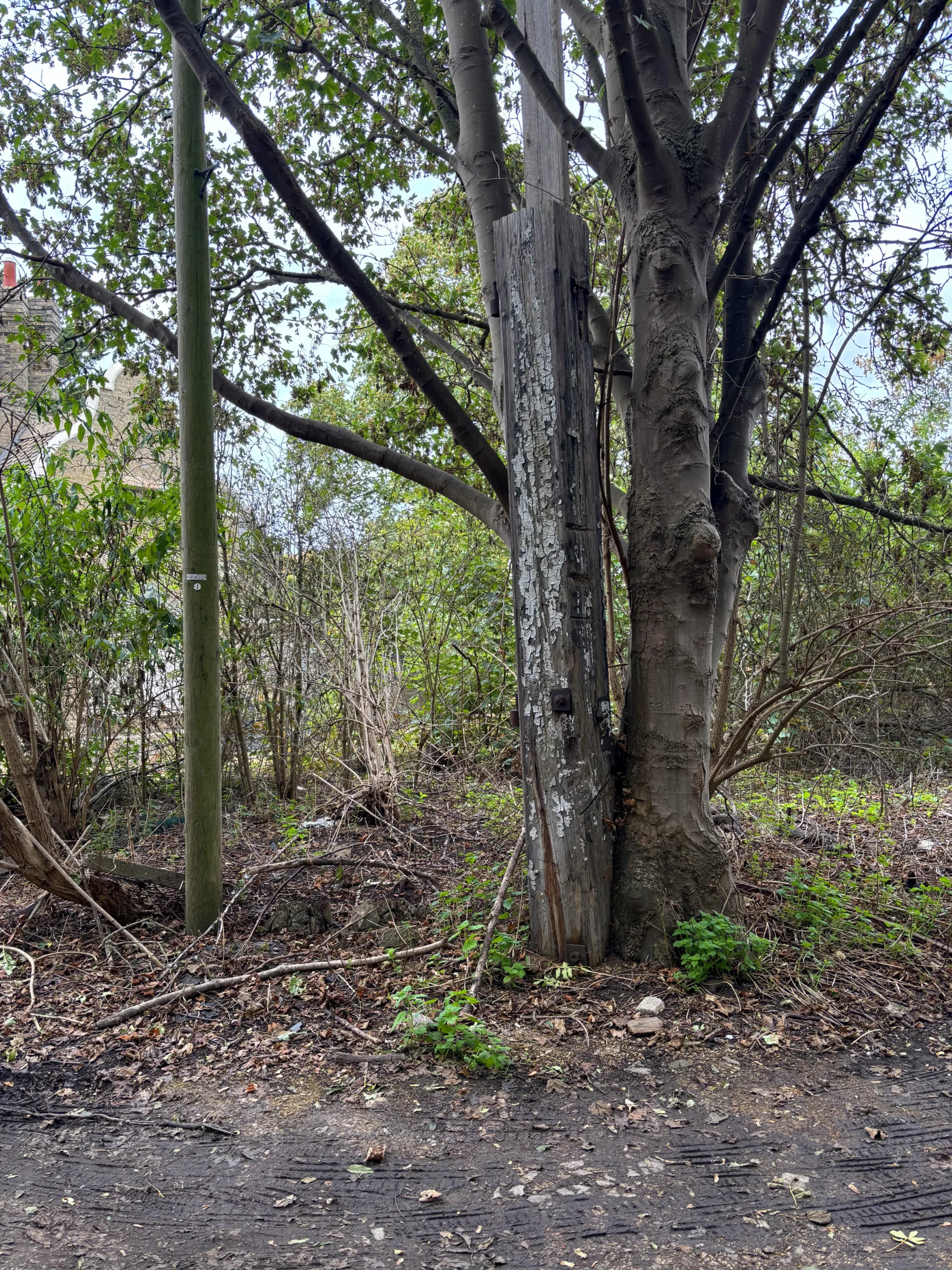
Old crossing gate.
Although we could see where the trackbed continued, the route ahead was completely overgrown and impassable. Instead, we followed the course of the railway into Huntingdon, tracing its route almost as far as the station car park.
A cluster of cottages overlooking the station caught our attention, so naturally we went to investigate. There we discovered what we believe was the former East Huntingdon station house, now a private residence. The clues were hard to miss, with neighbouring properties named Station Cottage and Sleepers.
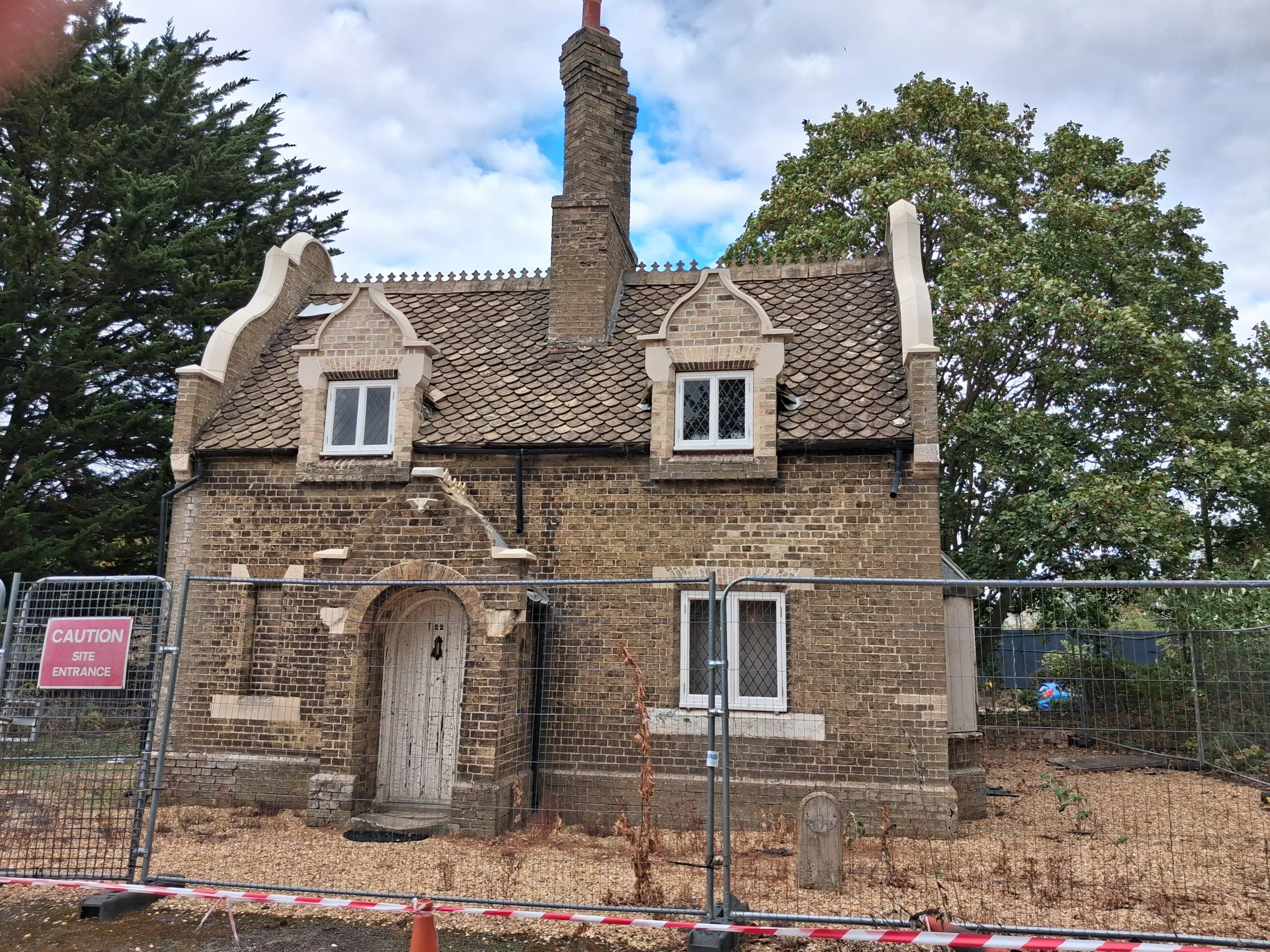
Crossing Keepers House, Godmanchester.
Interestingly, trains on this line did not run directly into what was then known as Huntingdon North. Passengers travelling north towards Peterborough or south towards London would have needed to change trains.
Despite a few unexpected hiccups, we were delighted to have successfully completed our walk. However, one final challenge remained: getting back to St Ives. Unfortunately we found out there was no direct bus to Cambridge station, only to Cambridge North. Instead, we had to travel back to St Ives and change buses there. The journey took considerably longer than expected, but thankfully we made our trains with only minutes to spare, to end our day that really was full of adventures!
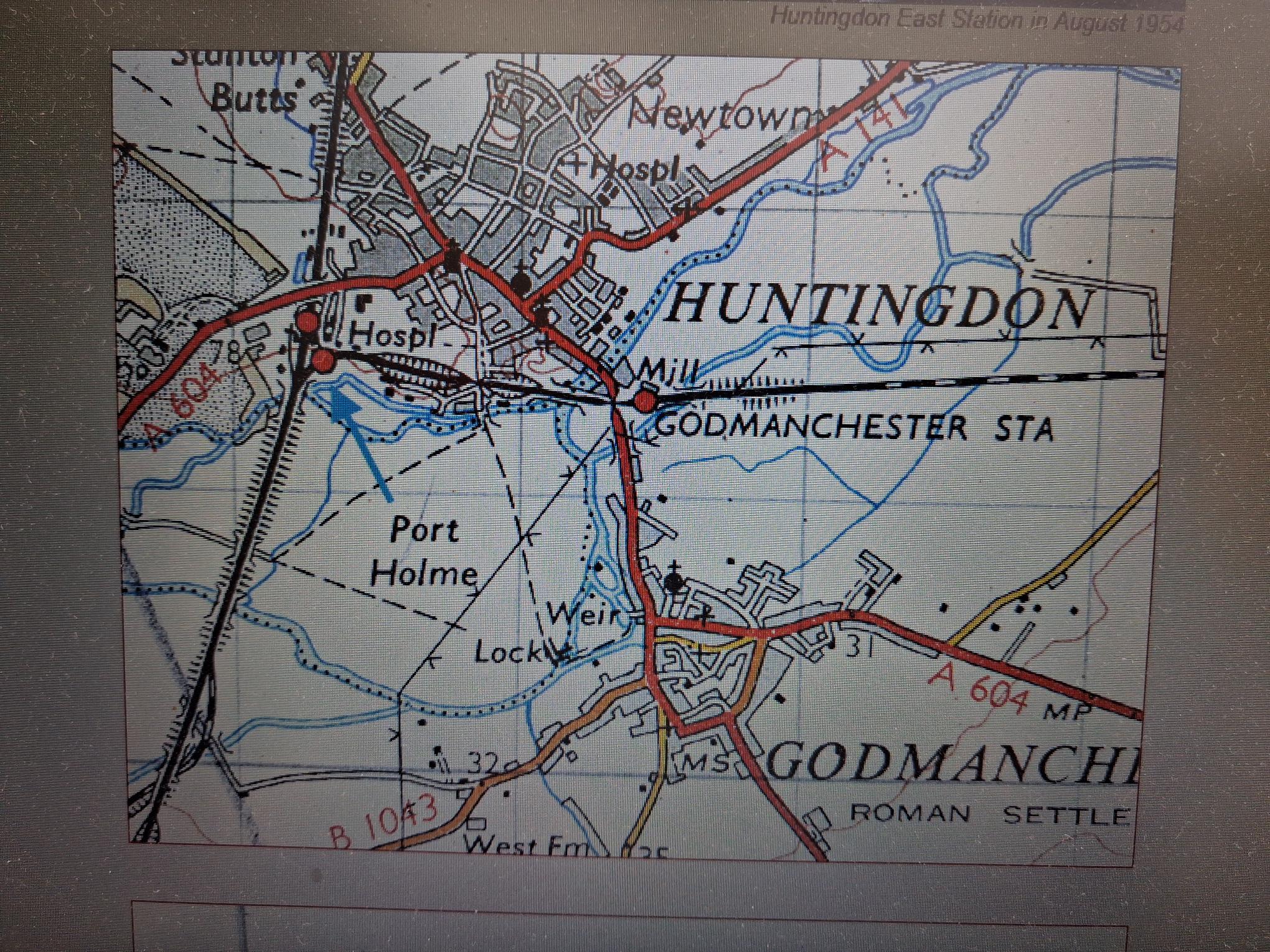
Ordinance Survey map from 1946, showing the railway route.
About Railway Ramblers
Railway Ramblers organises walks across Britain that explore former railway routes, railway heritage and the stories hidden within the landscape. To find out more about their walks and activities, visit the Railway Ramblers website.